


When Things Get Out of Control – Realign Your Natural Rhythm
- Dennis Clifton

- Oct 6, 2025
- 4 min read
Updated: Mar 10

In one of Buster Keaton’s most unforgettable scenes, our hero stretches out on the prow of a moving train, a massive railroad tie balanced in his arms as the engine drives on—unstoppable, unyielding.
No special effects. No stunt doubles. Just Buster… poised, focused, impossibly stoic in the midst of this chaos.
What made this classic scene possible was not technology (the film was made in 1926)—but Buster's own internal skills. Chief among his many talents was a highly-developed, natural sense of timing… balance…flow.
His body was attuned. Every move followed an inner clock—refined by instinct, repetition, and trust in his own design.
While we find his predicament hilarious to watch, on a more personal level many of us can relate to the situation he's in.
OUR INTERNAL RHYTHM
We’re all passengers on a kind of runaway train ourselves—carried forward by time, environment, and stress. But in order to keep things in balance, we have to rely on something much deeper than our physical skills alone.
I'm talking about our internal rhythm.
The one written into our biology since the beginning. The one that tells us when to wake, when to move, when to eat, when to rest. It’s called our circadian rhythm—and it’s not optional. It’s essential.
If we’re not careful, overstimulation can knock us out of our normal rhythm—without us even realizing it.
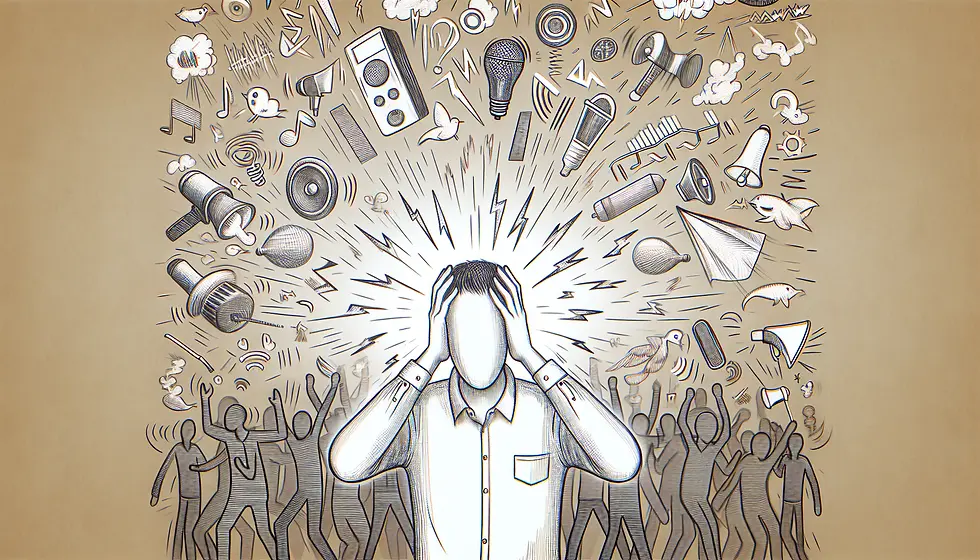
Our bodies were designed for cycles of light and dark, movement and rest, focus and recovery. But modern life floods us with constant input: screens that glow long after sunset, notifications that interrupt our focus, noise that never quite stops.
This never-ending stream of stimulation hijacks our attention and disrupts our natural cues for sleep and hunger. If continued it eventually creates a low-grade stress response that keeps our nervous system on high alert.
That alone is dangerous enough, but over time, this subtle disorientation builds. We start staying up later. Sleeping poorly. Eating at odd hours. Moving less. Thinking in shorter bursts.
The body’s internal clock—your circadian rhythm—gets out of sync. And when that happens, everything from hormone regulation to metabolism to mood can begin to unravel.

The irony? We often respond to this disruption by adding more stimulation—another scroll, another screen, another late-night snack. But what we really need… is to reset.
To recalibrate, yes—but more than that: to realign with the pattern our bodies still remember. To step away from the noise and return to the simple cues that reconnect us with our original rhythm: sunlight, stillness, walking, breathing, and consistent daily routines.
In a world of too much, it’s often subtraction—not addition—that brings us back into alignment.
THINK OF LIGHT AS YOUR ANCHOR
Sunlight doesn’t just illuminate—it carries vital information.

Morning light signals your brain to suppress melatonin, increase cortisol (the good kind), and initiate wakeful alertness. It sets your biological clock for the rest of the day, including when you’ll start feeling tired at night.
A daily practice of stepping outside within 30–60 minutes of waking—to look in the direction of the sun or even take a short walk—can powerfully reset your circadian alignment. No sunglasses, no windows—just natural light directly reaching your eyes.
In the evening, minimizing exposure to bright indoor lighting and screens allows melatonin to rise, preparing you for deeper, more restorative sleep. This simple adjustment improves mood, metabolism, hormonal balance, and even immune function.
MOVEMENT AS MEDICINE

Walking in the morning sunshine doesn’t just help reset your clock—it activates your metabolism, lubricates joints, and reduces insulin resistance. In fact, a short post-meal stroll can lower blood sugar, improve digestion, and promote calm.
Better yet, establish a rhythm of movement throughout the day. Morning walk. Midday stretch. Evening stroll. Our bodies love predictability—and thrive on consistency.
ROUTINE: THE FORGOTTEN SUPERPOWER
In a world obsessed with novelty and disruption, routine may feel boring. But in the longevity world, routine is a superpower.
Daily anchors like regular sleep-wake times, consistent meal timing (ideally within an 8–10 hour window), and habitual outdoor exposure create biological stability. That stability frees up your brain and body for renewal, repair, and long-term health.
Circadian misalignment has been linked to obesity, heart disease, depression, and even certain cancers. But reestablishing simple daily rhythms can reverse those risks.
YOUR BODY STILL REMEMBERS
Your body is not broken. It may be confused… disoriented by modern life… but it remembers the design it was built on.
It remembers light. It remembers movement. It remembers the rhythm it was created for.
The key is not radical reinvention—but quiet, consistent realignment.
Start with this:
Step outside every morning, within an hour of waking.
Walk every day—preferably in daylight.
Set a consistent bedtime and wake-up time.
Dim lights and screens 1–2 hours before sleep.
Stack small habits into a rhythm that your body can trust.
You don’t need to "hack" your biology–it works perfectly as it is!
You simply need to honor it by respecting our original primal blueprint and how our body has been designed to function.
And when you do, your energy, focus, sleep, and health will naturally improve.
Your body knows what to do.

Want more simple, science-based longevity insights? Just scroll down to subscribe to my newsletter and receive my free eBook.
Comments