


Strength Predicts Survival: What the Research Actually Shows

Updated: Mar 10

I was 15 years old when the Mississippi-born singer and songwriter Jerry Butler released a soul hit titled “Only the Strong Survive.” Not only did I love this man’s music (he headed up a group called the Impressions) but that title and phrase really stuck with me over the years.
And it wasn’t just me either.
That simple idea suggesting that strength determines survival has been echoed through music, movies, locker rooms, and evolutionary theory for decades.
But here’s the question I want us to think about:
What if that phrase is more scientifically accurate than we realized?
Not in a Conan-the-Barbarian, battlefield sense, but in a measurable, biological way.
Modern longevity research is calmly confirming something quite remarkable. When it comes to aging well, strength actually does predict survival.
This isn’t “gym bro” culture talking here. This is epidemiology, the science that breaks down patterns of health, disease, and survival across thousands of lives.
Over the past decade, large population studies have found that greater muscle strength is consistently associated with lower risk of early death. And this isn’t just from one specific disease, like cancer, but from all diseases.

In fact, something as simple as handgrip strength (which you know if you have it or not) has been shown to correlate with long-term mortality patterns across diverse populations.
Let that sink in.
A brief squeeze of a dynamometer can reflect trends that unfold over decades.
Now, this doesn’t mean cholesterol and blood pressure suddenly stop mattering. They do.
But what the research suggests is that strength itself may be a more powerful overall marker of physiological resilience than most people realize.
WHY ARE WE JUST NOW LEARNING THIS?
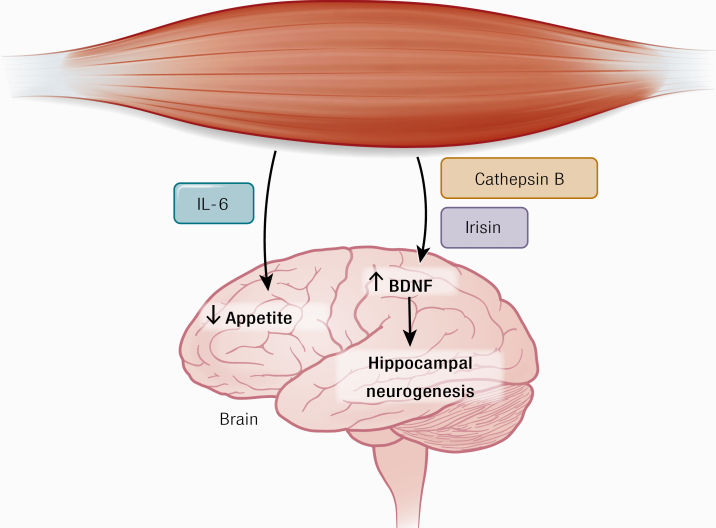
Because...emerging science is only now showing that muscle plays a far broader role than simply helping us move.
Skeletal muscle is now understood to function as an endocrine organ. When you contract muscle, it releases signaling molecules known as myokines. These molecules influence inflammation, insulin sensitivity, metabolic regulation, and even brain health.
In other words...
When you build strength, you are not just adding tissue. You are sending chemical signals throughout your entire body.
Now here’s something you’ll like.
Muscle also plays a central role in glucose disposal. It is one of the primary sites where circulating blood sugar is stored and utilized.
Translation: the more muscle you maintain, the more efficient your body becomes at handling calories and the less likely it is to store excess energy as fat. ⬅ I knew you'd like that one.
Then of course, there’s the MASSIVELY important issue of physical independence and the fear, often unspoken, of becoming a burden to the very family we once supported.
WHERE STRENGTH BECOMES VERY PRACTICAL:
Lower-body strength in particular is strongly associated with mobility and fall prevention.
Difficulty rising from a chair, climbing stairs, or losing balance during normal movement is often one of the earliest signs that independence is beginning to erode.
Functional decline like this is a powerful predictor of future loss of independence, and it deserves prompt attention.
The good news is that our muscle tissue was created with responsiveness built into it. When it is simply asked to work, it can adapt at any adult age.

Research involving adults in their 70s and even 80s consistently shows that resistance training improves strength, function, and quality of life.
It is not a young person’s advantage.
It is a God-given capacity built into our muscle tissue.
So do you need to start training for Mr. or Ms. Olympia?
Hardly. You don’t need to live in the gym either.
This doesn’t require extreme programs. It requires intention.
It could begin with something as simple as incline walking outside or on a treadmill. You could work with resistance bands or light dumbbells in your living room, gradually increasing the resistance each month.
One of my favorite movements is controlled bodyweight squats, done regularly to keep those leg muscles strong. What matters is that your muscles are asked to work consistently.
Muscles adapt to demand. They do not adapt to comfort.
So...maybe that old song title was onto something.
Only the strong survive.
Not the ones covered in body oil and artificial tans, but the ones who maintain the capacity to adapt their strength as they age.
In the Primal Health community, we call this “functional strength.”
That simply means strength that serves real life. The ability to move, rise, carry, stabilize, recover, and remain capable in the activities that matter most in life.
Strength, in this sense, is not about impressing anyone.
It is about preserving independence by building a physical reserve that carries you through illness, stress, and the unexpected.
The strength we build today may go a long way in determining the freedom we're able to keep tomorrow. I think that's worth thinking about. Don't you?
— Dennis Clifton
References for further study:
Grip strength and mortality — UK Biobank (BMJ, 2018):
Grip strength and mortality / strength outcomes — JAMA Network:
Muscle-strengthening activities and lower all-cause mortality — BJSM meta-analysis (2022):
Skeletal muscle as an endocrine organ — Pedersen & Febbraio, Physiological Reviews:
Resistance training benefits in older adults — major review of randomized trials:
Randomized trial / older adults around age 70+:

Want more simple, science-based longevity insights? Just scroll down to subscribe to my newsletter and receive my free eBook.
Comments